

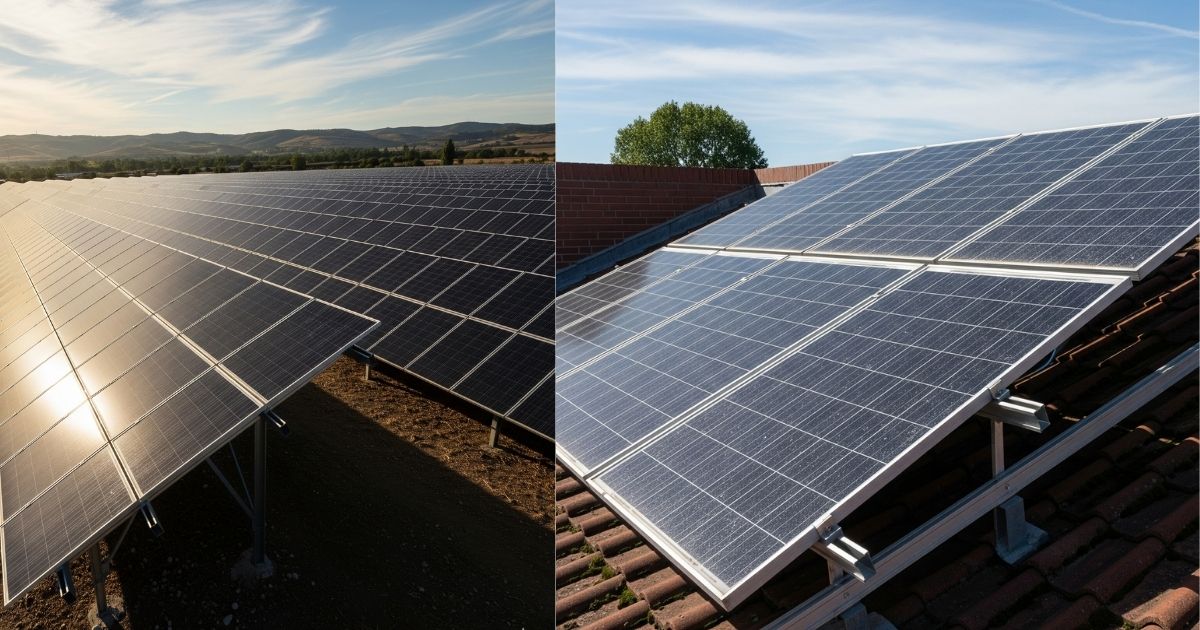
The best commercial solar panel orientation in the UK is usually true south-facing with a tilt of around 30 to 40 degrees, but the real answer is more nuanced than that. For many businesses, the best setup depends on roof shape, shading, available space, and whether the priority is maximum annual output, better morning generation, or a stronger return on investment.
At The Commercial Solar Company, we’ve spent more than a decade installing solar systems across the UK, from Manchester warehouses to London offices, and one thing is always true: good orientation makes a measurable difference. Getting the angle and direction right can improve generation, protect long-term performance, and make a commercial solar system far more valuable over its lifetime.
Why solar panel orientation matters
Commercial solar panels perform best when they capture as much usable sunlight as possible throughout the day. In the UK, that usually means a south-facing layout, but commercial roofs are rarely perfect, so the goal is often to make the best of the site rather than chase a theoretical ideal.
A well-planned layout helps reduce wasted roof space, avoids unnecessary shading, and improves the overall economics of the system. In practice, a slightly imperfect orientation is often still very effective if the design is done properly.
The best azimuth for commercial solar panels
Azimuth refers to the compass direction the panels face. In the UK, true south remains the strongest direction for solar generation because it follows the sun’s path across the sky most efficiently.
That said, south-east and south-west roofs can still perform very well, especially on commercial sites where roof space or structural constraints limit the layout. East- and west-facing systems can also work, particularly where businesses want a broader spread of generation across the day.
Typical azimuth performance
| Orientation | Typical output | Notes |
|---|---|---|
| South-facing | 100% | Best overall for annual yield |
| South-east / south-west | 85–95% | Strong option when the roof is constrained |
| East / west | 70–80% | Useful where generation timing matters more than maximum output |
At The Commercial Solar Company, we use precise surveying methods to align panels as close to true south as the site allows, ensuring strong energy production for commercial clients.
Choosing the right solar tilt angle
Tilt affects how directly the panels face the sun throughout the year. In the UK, a commercial solar panel tilt of around 30 to 40 degrees is usually the sweet spot, although the ideal figure can shift depending on location and roof type.
Flatter roofs often give installers more flexibility, which can make it easier to optimise the array. Sloped roofs are more constrained, so the focus becomes finding the best practical setup rather than forcing a perfect angle that may not suit the building.
Using the best types of commercial solar panels at the right angle will massively benefit your business.
Recommended solar panel tilt by city
| City | Latitude | Suggested tilt |
|---|---|---|
| London | 51.5°N | 35° |
| Birmingham | 52.5°N | 36° |
| Edinburgh | 55.9°N | 38° |
A fixed-tilt system is usually the most cost-effective choice for UK commercial installations. Adjustable systems can improve output in some cases, but they are not always worth the additional complexity or expense.
Our team customises tilt angles based on your location to maximise efficiency for each commercial site.
Site conditions that change the answer
This is where the real-world work begins. Roof shape, parapets, vents, plant equipment, chimney stacks, nearby buildings, and trees can all affect the final layout.
A site that looks ideal on paper can still underperform if shading or structural obstacles are ignored. That is why a proper survey matters more than any generic “best angle” rule.
Common shading issues
| Shading issue | Typical impact | Practical response |
|---|---|---|
| Nearby buildings | 10–30% loss | Adjust layout or raise mounting height |
| Trees | 5–20% loss | Trim, reposition, or redesign array zones |
| Roof structures | 5–15% loss | Rework the panel layout around obstructions |
For commercial sites in tighter urban areas, small adjustments to orientation can sometimes improve performance more than sticking rigidly to a textbook layout. That flexibility is often what separates an average install from a genuinely strong one.
Our site assessments ensure compliance with UK planning regulations while maximising sustainable energy savings for businesses.
Roof strategy advice
This is the part that often gets overlooked, but it matters just as much as orientation. The best commercial solar projects are not just technically sound — they are commercially sensible.
A good installer will look at roof strategy as a whole: which parts of the roof should be used first, whether the array should be split into zones, how to preserve access routes, and whether future expansion needs to be built in from day one. On many commercial buildings, the smartest design is not the one with the neatest symmetry — it is the one that protects future flexibility and gives the business the best long-term value.
That is especially important for businesses that may add battery storage later, expand operations, or want to phase their investment over time. A solar layout that looks simple can sometimes create problems later if it has not been planned with the wider site in mind.
Do trackers make sense?
Solar trackers can increase output, but they are not the default choice for most UK commercial systems. Single-axis trackers follow the sun across the day, while dual-axis systems also adjust for seasonal changes.
In theory, trackers can improve yield. In practice, most UK commercial sites get better value from a well-designed fixed system because it is simpler, cheaper, and easier to maintain.
Tracker comparison
| System type | Output increase | Best use case |
|---|---|---|
| Fixed system | Baseline | Most UK commercial sites |
| Single-axis tracker | 15–25% | Large open sites |
| Dual-axis tracker | 25–40% | Specialist high-yield projects |
For the majority of businesses, the extra cost and maintenance simply do not justify the uplift. If the roof or ground space is designed well, a fixed system usually wins on value.
Monitoring and long-term performance
Even the best orientation can underperform if the system is not monitored properly. Dirt build-up, new shading, or a shifting component can all reduce generation over time.
That is why ongoing monitoring matters. It helps spot performance dips early and gives businesses a clearer picture of how the system is working in the real world, not just on paper.
Monitoring software tracks solar panel performance metrics, ensuring panels operate at peak efficiency for maximum business solar ROI.
If you want to improve long-term return, keep an eye on generation trends, cleaning schedules, and any changes to the surrounding site. Small issues rarely stay small for long if they are ignored.
FAQs
Can solar panels work if they are not south-facing?
Yes. Southeast or southwest orientations can still perform well, with output reductions of roughly 5–15%. We optimise placement based on your site.
Does roof pitch affect commercial solar orientation?
Yes. Roof pitch often influences the final tilt angle, although mounting systems can help fine-tune the layout where needed.
Are solar trackers worth it for UK businesses?
Usually not for most sites. Fixed systems tend to offer better value unless the project is large, open, and designed specifically for tracking.
What happens if shading appears later?
That is why monitoring matters. Ongoing checks help identify output losses early so adjustments can be made if needed.
Conclusion
The best commercial solar panel orientation for UK businesses is usually south-facing with a tilt of around 30 to 40 degrees, but the smartest answer is always site-specific. A good commercial solar design balances direction, tilt, shading, roof space, and long-term business value rather than chasing a perfect rule of thumb.
At The Commercial Solar Company, we design systems around real commercial buildings, not theory. That is what helps businesses get more from their solar investment over the long term.
If you want to optimise your business solar installation and harness the full potential of renewable energy with our UK-wide expertise, contact us for a free consultation.
As one of the best solar panel installers in the UK, we deliver tailored solar energy solutions for UK businesses, from factories in Birmingham to retail chains in Edinburgh.
